
NXP TJA1021TK/20: A Comprehensive Technical Overview of the LIN 2/SAE J2602 System Basis Chip
The evolution of in-vehicle networking has necessitated the development of robust, cost-effective communication solutions for sub-networks. The Local Interconnect Network (LIN) bus has emerged as the de facto standard for such applications, and its functionality is greatly enhanced by specialized integrated circuits. The NXP TJA1021TK/20 is a premier example of a System Basis Chip (SBC) designed explicitly to serve as the central interface between a LIN master node's microcontroller (MCU) and the physical LIN bus.
At its core, the TJA1021TK/20 is a highly integrated device that consolidates several critical functions into a single 8-pin package. Its primary role is to provide the physical layer interface compliant with the LIN 2.0, LIN 2.1, LIN 2.2, LIN 2.2A, and SAE J2602 standards. This compliance ensures reliable serial communication on the LIN bus, handling the translation of digital signals from the MCU into the defined bus voltage levels and vice-versa. The integrated LIN transceiver is designed for very low electromagnetic emission (EME) and high electromagnetic immunity (EMI), which is paramount in the electrically noisy environment of an automobile.
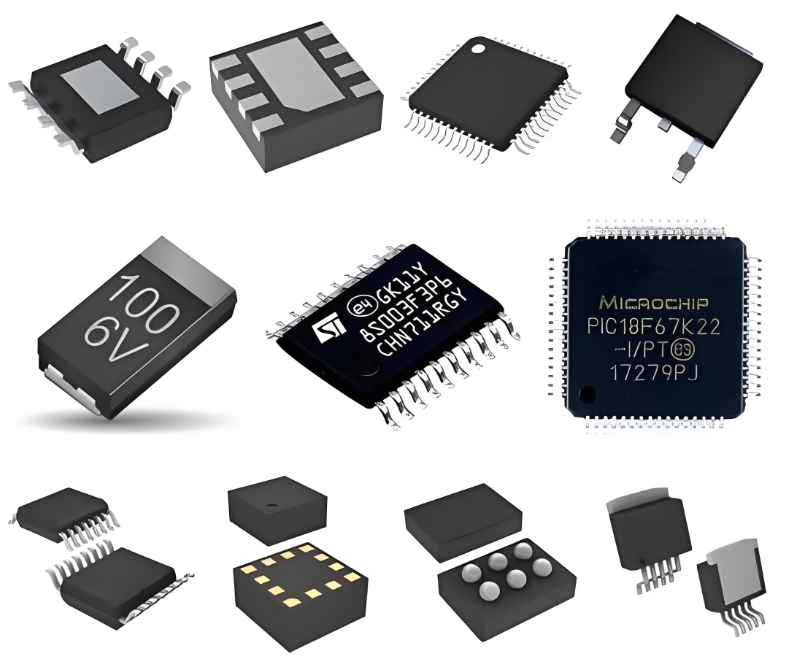
Beyond the transceiver, the chip's "System Basis" nature is revealed through its additional features. A key component is the integrated voltage regulator that provides a stable 3.3 V or 5 V supply from the vehicle's battery (VBAT) to power the external microcontroller and other local circuitry. This regulator is capable of supplying up to 70 mA, simplifying the overall system design and reducing the component count. Furthermore, the device includes a window watchdog and a high-security mode for the LIN physical layer, enhancing the system's reliability and robustness. The built-in fail-safe features, such as thermal shutdown and protection against loss of battery and ground, ensure the device and the network remain protected under fault conditions.
The TJA1021TK/20 is engineered for very low quiescent current consumption in sleep mode, typically drawing only 9 µA. This ultra-low power characteristic is essential for supporting modern vehicle requirements for energy efficiency, making it ideal for nodes that must remain in a low-power state until awakened by a LIN bus command or a local wake-up event.
ICGOOODFIND: The NXP TJA1021TK/20 is far more than a simple transceiver; it is a comprehensive, highly integrated SBC that provides the essential foundation for a robust LIN master node. By combining a compliant transceiver, a voltage regulator, and protective features into a single chip, it significantly reduces system complexity, cost, and board space while enhancing overall network reliability and power efficiency for automotive applications.
Keywords: LIN Transceiver, System Basis Chip (SBC), Physical Layer Interface, Low Quiescent Current, Automotive Networking.

